About Me

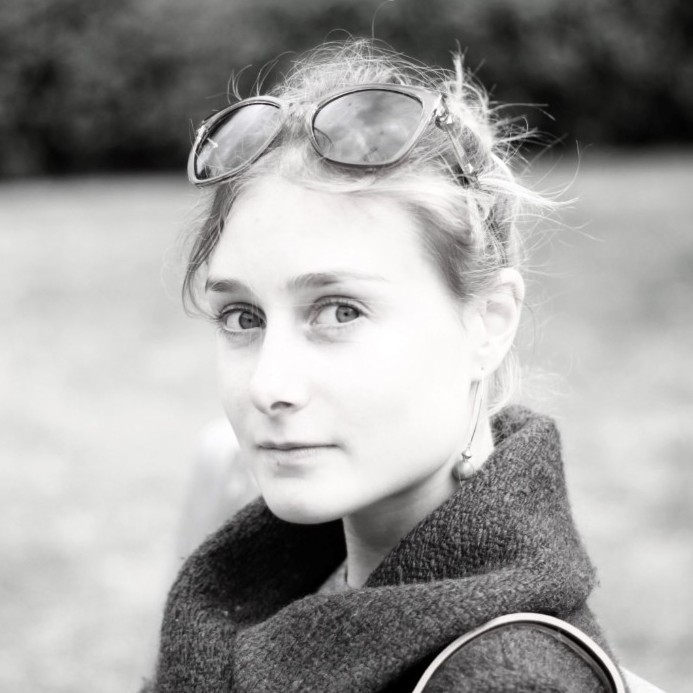
headshot

Hi, I'm Inga, a Rosetrees PhD Plus scholar, BiTS (Big If True, Renaissance Philanthropies) fellow, and recent PhD graduate from the University of Oxford. I am fascinated by the digital-physical overlap at the nanoscale: a world in which quantum effects dominate what we see and how matter interacts. Questions I wonder about include: What resultant behaviours would emerge if physics-informed neural nets (PINNs) were integrated with virtual cells? How long till we will be able to create a world model of a cell, or immune system? If proteins fold in nanoseconds, do they already compute faster than GPUs?

During my PhD in the Stevens Group I explored nucleic acid networks, outsourced my pipetting to an I.DOT (automated pressure dispensing robot), and had my research licensed to an Oxford spinout.

Reach out to learn what I'm building next.

Writing

I write about insights gleaned from deep, fundamental understanding.

Content goes beyond what can be prompted: it is a glimpse into the intersection of ideas - the thoughts authors of scientific journals express between the lines. What can you expect? 1. Passion for science. Put eloquently, the sharing of a symphony of molecules oscillating at rhythmic frequency, the crystallisation of a complex diffraction pattern; the solving of a structure through 'reasoning' driven by matrices crunching numbers on etched silicon substrates. 2. Infrequent posting. Everything I write about is because it caught my eye and is translationally valuable. Curiosity is at the centre of all writings. 3. Deep technical reads.

I write under the pen name Dispersion Limits, and am also a core contributor to Decoding Science.

The Immune System is an Operating System (Or: Meet ImmunOS).
Imagine being a T-cell. You roam through the body, sensing your way forward by reading peptide fragments. Cells move past you as peptide clouds. See here, a cell expressing actin and tubulin peptides! Just another contracted cytoskeleton signal, nothing to worry about. You shift to its neighbour: vimetin and GAPDH peptides flood your senses, telling you this cell too is in motion and undergoing routine energy metabolism.
ImmunOS001"
Decoding Science 012: Cleaning Water from Microplastic, LLMs & Scientific Production and a Novel Computational Method for Learning Context
Mixture-of-Experts (MoE) has become the default for scaling frontier LLMs; it allows dividing compute across specialist subnetworks, making the model use only a fraction of the model per token rather than activating the entire net. However, whilst MoE reduces the cost per token it cannot bypass the need to recompute known facts. So what happens when a second type of memory is introduced to complement model input → output transformations?
DecodingScience012
Jan. 2026 Read post →
Decoding Science 004: DeepMind and LIGO's Deep Loop Shaping, OpenAI for Science, Grant Decisions by Algorithm, Translating Molecular Microscopy into Structure
How close are generative models getting to simulating data that is representative of physical results?
DecodingScience004
Sep. 2025 Read post →
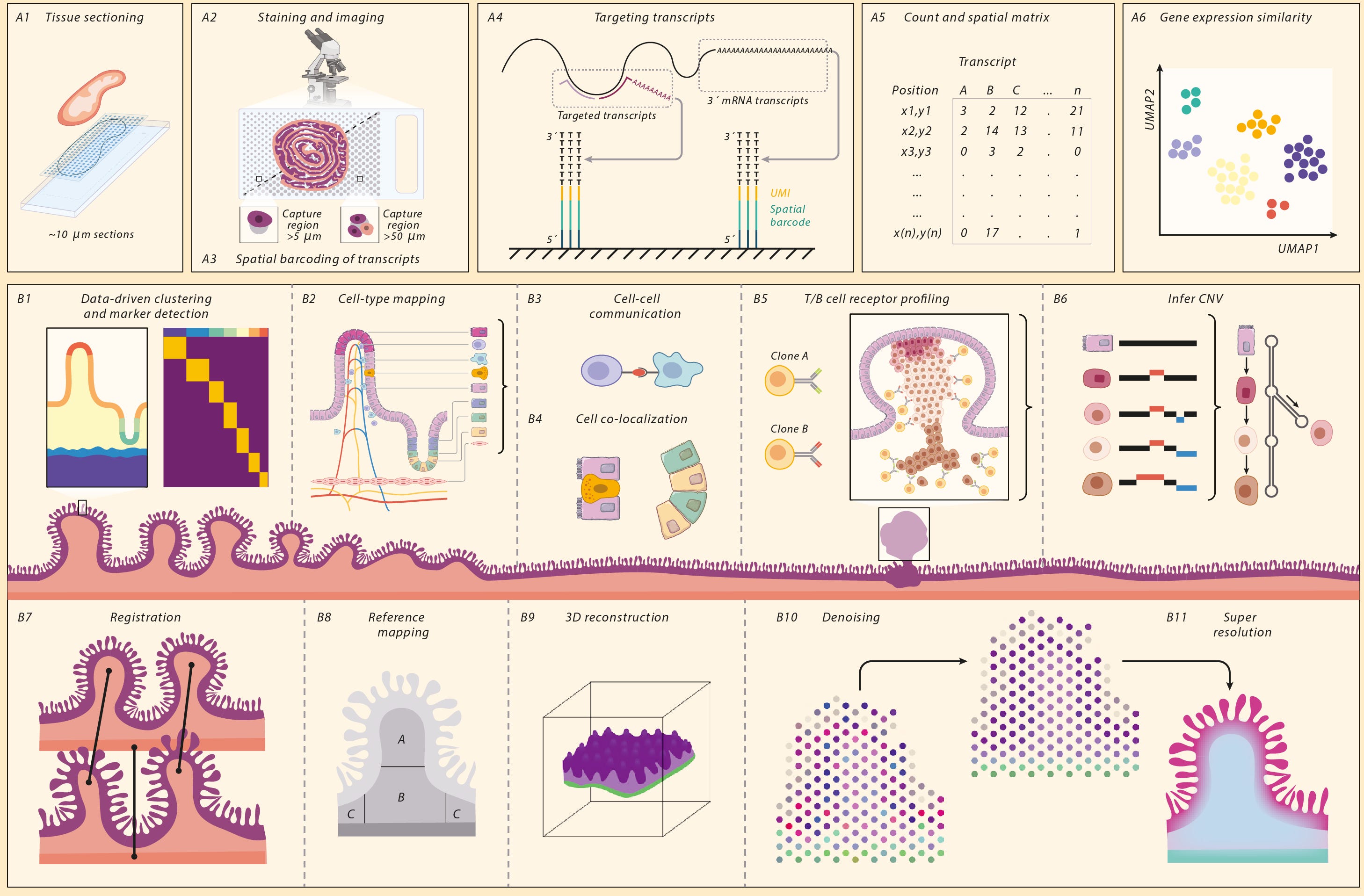
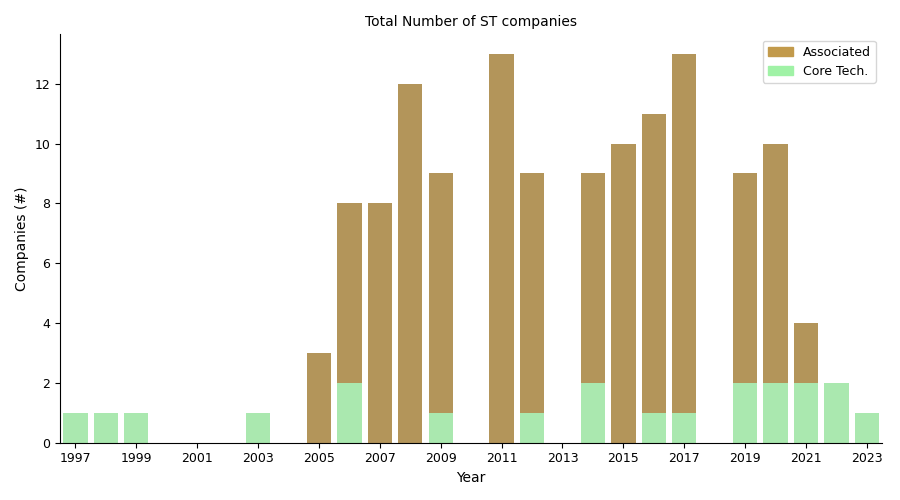
The Omics Revolution: Exploration of a cell and its environment through a spatial transcriptomics lens.
Part I (of a 3-part series): Technology.
STpartI
Oct. 2024 Read post →
(Continued) The Omics Revolution: Why can't we just sequence everything?
Part II: Translation.
STpartII
Nov. 2024 Read post →
(Act III) The Omics Revolution: Trends in and beyond Spatial Transcriptomics.
Part III: The Future.
STpartIII
Nov. 2024 Read post →

Publications

Publications listed [in process] are in final writing stages or cannot be disclosed due to licensing reasons.

Awards, Fellowships & Affiliations

Curriculum Vitae

To learn more about what I'm building send me a message at connect@inga.bio.